
One of the most rewarding experiences I have had as a child educator began with a mother who had been following my child care on Facebook for several months. Her three-year-old son had already been asked to leave multiple child care programs because of challenging behaviors. At the time, he was also attending a half-day pre-K program in a small, self-contained classroom of four children who all required significant behavioral support. While the setting offered additional adult support, it also gave him fewer opportunities to learn alongside peers who could model the social and self-regulation skills he was still developing.
His mother and I spoke multiple times before I agreed to enroll him, sometimes staying on the phone for hours. She was searching for someone willing to see beyond his behavior and give her son a chance.
I was hesitant. I knew his needs might be beyond what I could manage, and I was honest with his mother about that. Eventually, I agreed to give it a try, with the understanding that if I could not safely and appropriately meet his needs, she would find another placement.
He came in ready to test every boundary I had.
He stood on furniture, flipped chairs and his cot, dropped to the floor kicking his legs, attempted to elope, and even picked his nose and proudly said, “Yum.” Nose-picking happens to be one of my personal pet peeves, so I had to make a commitment to myself that I would not allow my frustration to interfere with how I responded to him. I remained firm, consistent, and calm, even when the behavior pushed every button I had.
Little by little, things began to change.
One of the first things I noticed was his ability to regulate within my environment. At home, he had a security blanket that was very important to him. The first time I saw it, it was gnarly, and I told his mother it would need to go back home with her. He never brought it into my child care.
Instead, when he arrived each morning, he learned to choose activities that helped him calm and regulate himself. Once he was ready, he joined the group and was able to stay engaged with us throughout the day. He still had his blanket at home, but while he was with me, he discovered that he could feel secure and manage his emotions without it.
His vocabulary expanded, and he began using words and art to express what he was feeling.
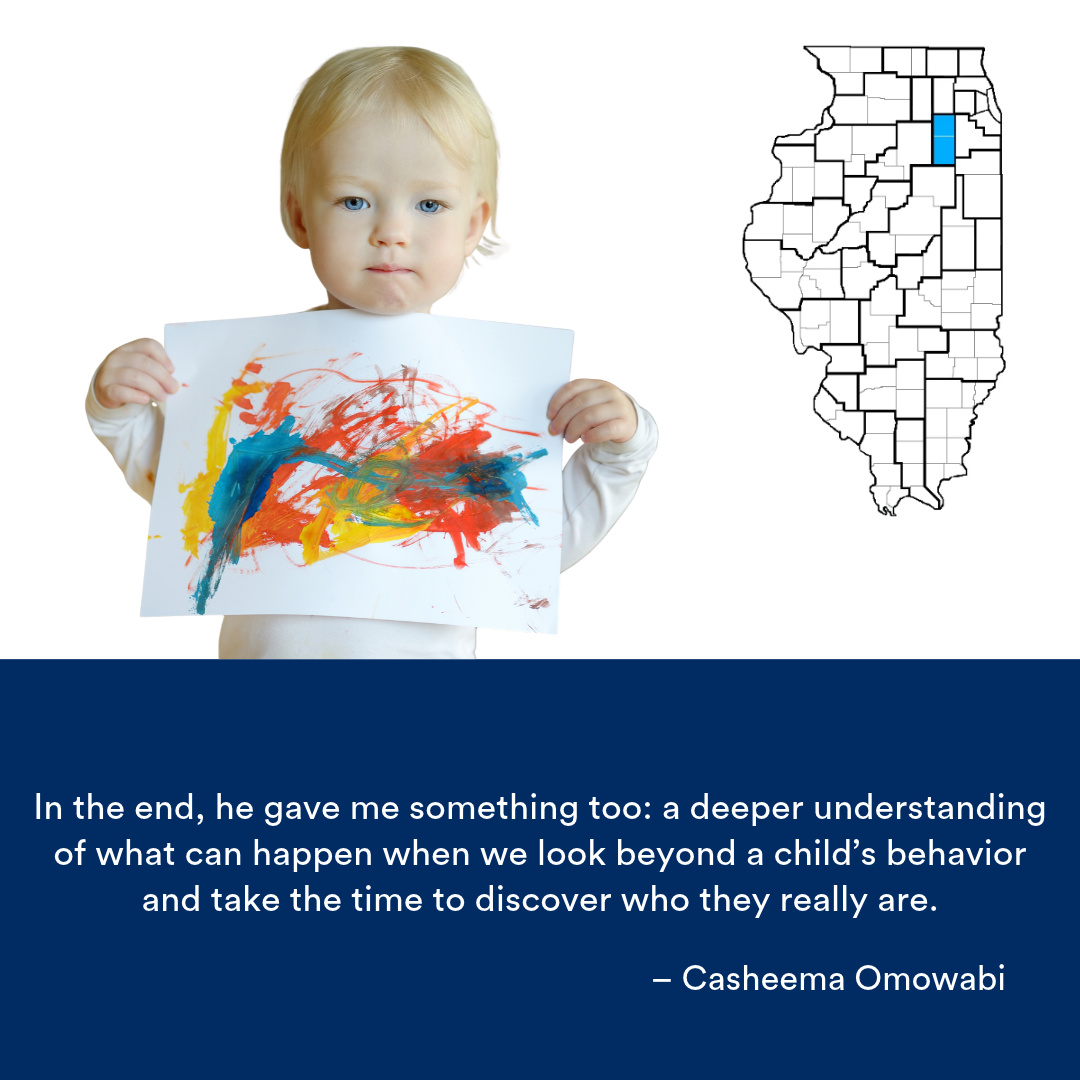
One day, he drew a picture related to an incident in which he had hit one of his teachers at school. His drawing showed the result, a knot on her head. More importantly, he was able to talk about what had happened and tell me that he was sorry. We sent the drawing to his teacher, and her response was heartfelt. For me, that moment showed just how far he had come. A child who had once communicated so much through physical behavior was beginning to reflect on his actions, express himself, and show empathy.
His mother and I became true partners. She repeatedly told me that if I believed something would help her son, she would follow through because she wanted him to have a chance. That commitment made an enormous difference. I began attending meetings with her, participating in IEP [Individualized Education Program] sessions, asking questions, and advocating alongside her to make sure his strengths, progress, and needs were all being considered, not just his behavior.
At the end of the school year, his mother decided not to return him to that program and instead enrolled him with me full-time. I was still apprehensive, but I accepted the challenge. With greater consistency, individualized support, appropriate peer interaction, and a predictable environment, he continued to thrive.
As Kindergarten approached, his mother reconsidered whether he still needed the services being provided through the school and ultimately chose to withdraw him. Later testing showed that he had above-average abilities.
When I heard the results, my first thought was, “I knew it.” I had already seen the bright, capable child underneath the behaviors that had caused so many people to focus on what was difficult about him.
That experience changed me as a provider. Before meeting him, I was much more hesitant about enrolling children with additional needs. After watching what could happen when a child was given stability, patience, appropriate expectations, and a strong partnership between home and child care, my heart softened. Since then, I have welcomed other children with additional needs and made it a priority to work closely with their families.
He came into my program because his mother was looking for someone willing to give him another chance. In the end, he gave me something too: a deeper understanding of what can happen when we look beyond a child’s behavior and take the time to discover who they really are.